AI-Powered Trail Cameras Are Changing Wildlife Monitoring in 2026
For over two decades, trail cameras have been the eyes of hunters, wildlife researchers, and land managers in remote locations. They sat on trees, waited for motion, and dutifully stored photos onto SD cards. That era is rapidly ending. In 2026, trail cameras have become something closer to autonomous field assistants — and artificial intelligence is the reason why.
AI Moves to the Edge
The biggest leap in trail camera technology this year is not about more megapixels or longer flash range. It is about what happens inside the camera before a photo ever leaves the device.
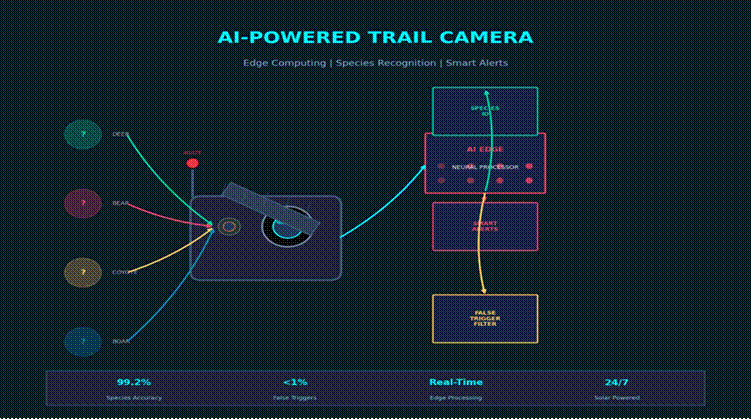
High-end 2026 models now carry dedicated neural network processors — the same class of chip found in smartphones — that run computer vision algorithms directly on the device, with no cloud connection required. This is called **edge computing**, and it changes everything about how trail cameras operate.
Species Recognition That Actually Works
Unlike traditional passive infrared (PIR) sensors that simply detect 'something warm moving', AI-powered cameras classify what they see in real time. The best models in 2026 can instantly tag detected subjects into categories including:
• White-tailed deer — buck vs. doe differentiation
• Turkey, wild boar, coyote — key species for North American hunters
• Human and vehicle — critical for property security
Once identified, the camera makes intelligent decisions. A 'Smart Alert' can be configured to only push notifications when a mature buck walks past, while silently archiving raccoon and squirrel photos to the cloud without interrupting your day.
"In 2026, the camera isn't just recording — it's thinking."
Ending the False Trigger Problem
Anyone who has used a trail camera knows the frustration: you check an SD card after three months, expecting trophy buck photos, and find 4,000 images of wind-blown branches. AI solves this directly.
On modern AI cameras, the built-in processor runs an image analysis pass on every frame after motion detection. If the algorithm cannot identify a meaningful shape — human, animal, vehicle — it discards the image before saving or transmitting. This simultaneously saves battery life, reduces cellular data consumption, and keeps your photo gallery clean.
What This Means for the Industry
• Hunters spend less time scrolling and more time hunting — algorithms sort weeks of data in seconds, grouped by species
• Wildlife researchers gain reliable population data without manual photo classification
• Property owners receive instant, relevant security alerts without false alarms
As AI edge computing becomes standard across the industry, the gap between entry-level and professional trail cameras will increasingly be defined not by hardware specs, but by software intelligence. GrandVision's latest generation of trail cameras is built with this AI-first philosophy, delivering smart scouting capabilities at competitive price points.
About GrandVision
Shenzhen Grand Vision Technology Co., Ltd. is a leading manufacturer of outdoor imaging products, including trail cameras, night vision devices, action cameras, and children's cameras. With a strong R&D team and ISO-certified production, we deliver OEM/ODM solutions trusted by brands and retailers worldwide.
Visit us at www.grandvisionsz.com | Contact: sales@grandvisionsz.com
