AI Edge Computing in 2026: How Smart Trail Cameras are Transforming Wildlife Monitoring and Security
The landscape of remote surveillance has shifted dramatically from simple "motion-triggered" photography to a highly sophisticated ecosystem. In 2026, the defining trend of the trail camera industry is the integration of AI Edge Computing and Advanced Species Recognition—technologies that are fundamentally changing how hunters, wildlife researchers, and property managers interact with the field.
Traditional Passive Infrared (PIR) sensors are no longer enough. Modern trail cameras now utilize onboard neural networks to analyze images in real-time before transmission, creating an intelligent filtering layer that separates meaningful activity from noise.
Why AI Edge Computing Matters
When a camera captures a movement, the internal processor instantly categorizes the subject into specific buckets: bucks, does, turkeys, coyotes, humans, or vehicles. This edge processing—performed locally on the device without cloud round-trips—brings three transformative advantages:
1. Zero False Triggers
No more hundreds of empty photos caused by blowing branches, shifting shadows, or wind-blown rain. The AI engine evaluates each capture against trained models and discards non-target events before they ever reach your phone or cloud storage.
2. Smart Alerts
Through mobile applications, users can set custom push notifications. You can configure your camera to alert your phone instantly only when a "Buck" or a "Vehicle" is detected, while silently uploading photos of "Does" or small rodents to the cloud for later review. This selective alert system means you see what matters, when it matters.
3. Data and Battery Saving
By sorting and filtering photos at the hardware level, the camera compresses and transmits only what matters. This significantly extends battery life—often doubling field deployment windows—and reduces cellular data usage by up to 80%, which translates directly into lower monthly operating costs.
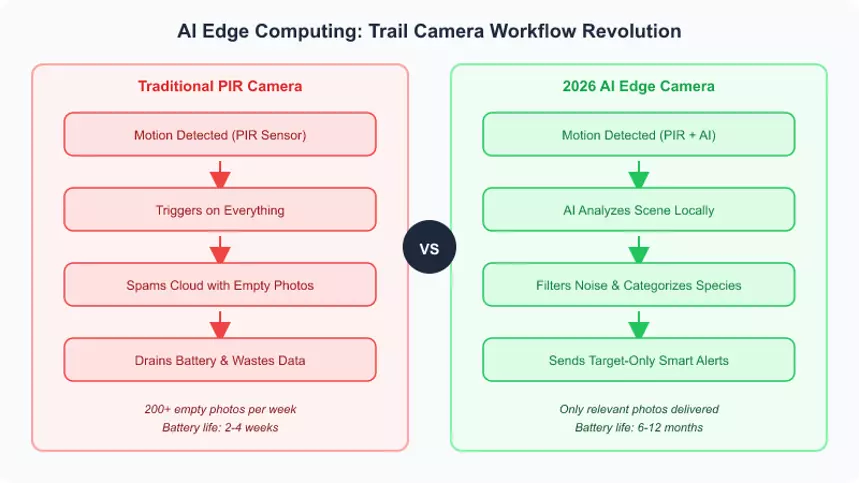
Figure 1: How AI Edge Computing transforms the trail camera workflow—from trigger to actionable alert.
Cellular Redundancy and Hybrid Roaming
Another massive leap in 2026 is the widespread adoption of "Auto-Connect" Multi-Carrier SIM technology. Cameras no longer bind to a single network provider. Instead, they dynamically roam across multiple cellular carriers to find the strongest available 4G LTE or 5G signal without user intervention.
This means a camera deployed in a remote mountain valley automatically switches between AT&T, Verizon, and T-Mobile towers depending on which offers the best coverage at that specific location. For users managing multiple cameras across varied terrains, this eliminates the frustration of dead zones and network-specific limitations.
The Autonomous Scouting Assistant
Combined with built-in high-efficiency solar panels and internal GPS anti-theft tracking, the modern trail camera has transformed into a fully autonomous, worry-free scouting assistant. Key integration features include:
- Solar Continuous Power: High-efficiency monocrystalline panels maintain charge through cloudy days and winter months, enabling year-round deployment without battery swaps.
- GPS Anti-Theft Tracking: Internal GPS modules report location data if the camera is moved, deterring theft and enabling recovery.
- Over-the-Air Firmware Updates: Manufacturers push AI model improvements and feature enhancements directly to deployed cameras, ensuring your hardware stays current.
- Multi-User Access Control: Share camera feeds with hunting partners, family members, or security teams through granular permission settings.
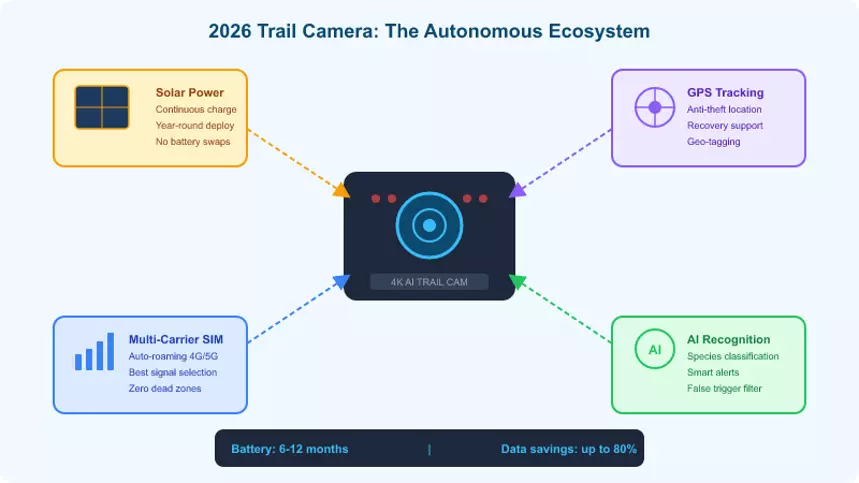
Figure 2: The 2026 trail camera ecosystem—solar power, GPS security, multi-carrier connectivity, and AI intelligence in one autonomous unit.
What This Means for Buyers and Distributors
For outdoor retailers and distributors, the message is clear: the trail camera market in 2026 is no longer about megapixels alone. Buyers are asking about AI capabilities, carrier flexibility, and solar autonomy. Products that integrate these features command premium pricing and generate higher customer satisfaction rates, leading to stronger repeat purchase behavior and brand loyalty.
At Grand Vision Technology, our trail camera lineup—including the HC30C (4G + 4K solar-powered) and HG200 (4G + GPS + 2K)—incorporates these cutting-edge technologies to meet the evolving demands of the global outdoor market. Our R&D team continuously refines AI recognition models to deliver the accuracy and reliability that serious users demand.
Looking Ahead
As AI models become more sophisticated and cellular networks continue to expand, we expect trail cameras to evolve further into predictive scouting tools—analyzing animal movement patterns, weather correlations, and seasonal behaviors to provide actionable insights rather than just images. The future of wildlife monitoring is intelligent, autonomous, and connected.
For product inquiries and distribution opportunities, visit www.grandvisionsz.com or contact us at sales@grandvisionsz.com.
