The Digital Revolution in Night Vision: Bridging the Gap Between Military Tech and Consumer Optics
The global night vision market has experienced massive acceleration, reaching an estimated $9.6 billion in 2026. Driven by rapid advancements in sensor sensitivity and digital image processing, night vision devices are transitioning from high-end tactical gear reserved for military and law enforcement into accessible, versatile tools for outdoor exploration, wildlife observation, and commercial security.
This shift represents one of the most significant democratizations of optical technology in recent history—capabilities that once cost tens of thousands of dollars are now available to consumers at a fraction of the price, without sacrificing the core functionality that makes night vision indispensable.
The Rise of High-Resolution Digital Night Vision
While traditional analog intensifier tubes (Gen 2+ or Gen 3) still dominate military defense sectors due to hands-free goggle requirements and zero-latency performance, Digital Night Vision Cameras and Binoculars represent the fastest-growing commercial segment. The gap between analog and digital has narrowed dramatically, with digital sensors now achieving light amplification levels that rival Gen 2+ tubes while offering features that analog systems fundamentally cannot provide.
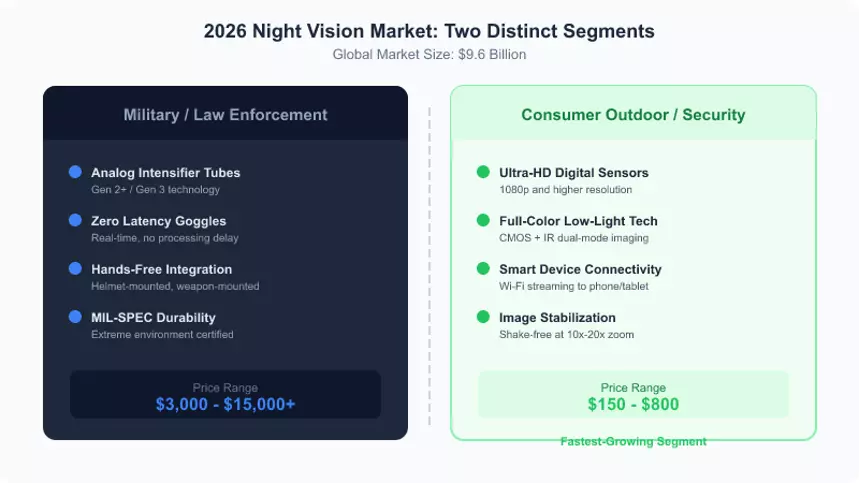
Figure 1: The 2026 night vision market is bifurcating into two distinct segments with different technology priorities.
In 2026, consumer preferences have locked onto three core attributes: Ultra-HD resolution (1080p and higher), extended battery efficiency, and seamless smart connectivity. These three pillars define the modern digital night vision experience and separate premium products from budget alternatives.
Key Technological Trends
Full-Color Low-Light Imaging
Perhaps the most visually striking advancement is the adoption of ultra-sensitive CMOS sensors that can render crisp, full-color images in deep twilight conditions. The latest digital night vision monoculars and binoculars leverage large-pixel sensors with advanced noise reduction algorithms to capture color detail that was previously invisible to both the naked eye and older digital devices.
When ambient light drops below the threshold for color imaging, the device seamlessly transitions to highly optimized Infrared (IR) illumination—using invisible 850nm or 940nm IR LEDs to illuminate the scene without alerting wildlife or drawing attention. This dual-mode operation gives users the best of both worlds: full-color observation during dawn, dusk, and moonlit nights, with reliable IR performance in absolute darkness.
Smart Device Ecosystem Integration
Modern digital night vision devices now act as connected hubs rather than isolated optical instruments. Users can stream real-time nighttime footage directly to smartphones or tablets via built-in Wi-Fi, allowing multiple observers to view wildlife behavior simultaneously without crowding around a single eyepiece. This capability has transformed group wildlife observation, security monitoring, and even nighttime boating.
Key connectivity features include:
- Live streaming to multiple devices simultaneously via Wi-Fi hotspot
- Remote control of recording start/stop, zoom, and IR intensity from a phone
- Instant sharing of photos and videos to social media or cloud storage
- Firmware updates delivered over-the-air to improve performance and add features
Portability and Optical Stability
Built-in digital image stabilization is becoming a standard feature in 2026. This technology allows hobbyists to achieve clear, shake-free images at high magnifications—such as 10x or 20x digital zoom—without needing heavy tripods. The stabilization algorithms analyze frame-to-frame movement and compensate in real-time, resolving the long-standing weight barrier of older nighttime optics.
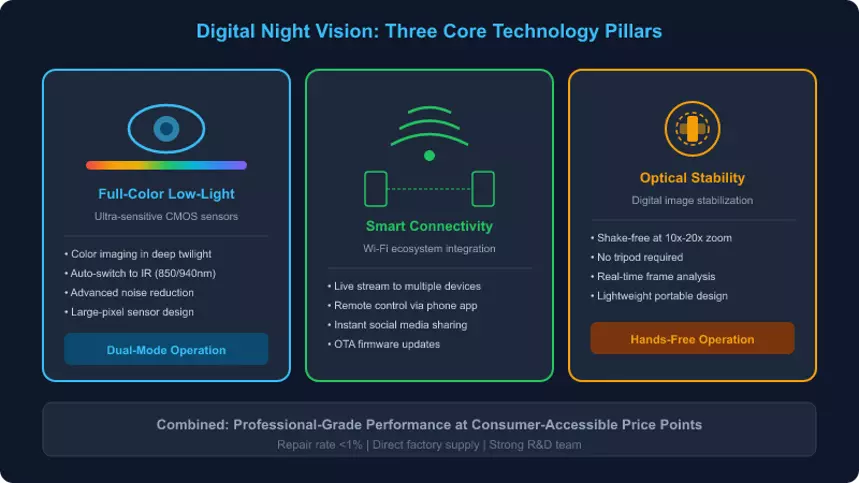
Figure 2: Core technology pillars of 2026 digital night vision—full-color sensors, smart connectivity, and optical stabilization.
Applications Beyond the Field
The accessibility of digital night vision has opened applications that were previously impractical or unaffordable:
- Wildlife Research: Researchers can now document nocturnal animal behavior with full-color detail, streaming footage to research teams in real-time.
- Property Security: Rural property owners use digital night vision monoculars for perimeter patrols, replacing expensive fixed camera systems with mobile, on-demand surveillance.
- Marine Navigation: Boaters navigate dark waterways with enhanced visibility, identifying hazards and markers that are invisible to the naked eye.
- Search and Rescue: Volunteer SAR teams benefit from affordable thermal and digital night vision for locating lost persons in low-light conditions.
The Grand Vision Advantage
At Grand Vision Technology, our night vision product line—including the SPX5-80 digital telescope and DS-X7 rifle scope—incorporates the latest digital sensor technology with robust construction designed for real-world field use. Our engineering team focuses on the three pillars that matter most to consumers: image clarity, battery endurance, and connectivity.
With a field-tested repair rate below 1%, our products deliver the reliability that outdoor enthusiasts and security professionals demand. Our direct-from-factory supply model ensures competitive pricing without compromising on the optical quality that defines a premium night vision experience.
Looking Forward
As CMOS sensor technology continues to advance and AI-assisted image processing becomes more powerful, we anticipate the gap between digital and analog night vision will close entirely within the next few years. The future belongs to devices that combine military-grade performance with consumer-friendly features—and that future is already here.
Explore our full night vision product range at www.grandvisionsz.com or contact sales@grandvisionsz.com for distribution inquiries.
