The "Screen-Free" Movement: Why Analog and Retro Digital Cameras are Winning the Gen Z and Tween Markets
A surprising shift is occurring in the imaging industry. While the overall camera market has experienced a "Great Slowdown" in traditional smartphone-like devices, fixed-lens compact cameras are seeing a remarkable 13.6% boom. Leading this revival is a massive cultural trend among parents, tweens, and teens: the desire to decouple photography from social media and smartphone distraction.
This movement represents a fundamental rethinking of what a camera should be for younger users—not a device that feeds content into the digital attention economy, but a tool for mindful, present-moment creativity.
The Appeal of the Screen-Free Experience
For years, kids' cameras were toy-like plastic devices with small LCD screens that mirrored smartphone habits: snap, review, delete, repeat. In 2026, the trend has flipped completely toward retro digital "screen-free" cameras and hybrid instant print cameras.
Devices like the viral Camp Snap concept—which features no rear LCD screen, a simple optical viewfinder, and a rugged, vintage-style chassis—have captured the youth market by storm. These cameras borrow the aesthetic and tactile experience of classic film cameras while leveraging modern digital sensors and storage, creating a product that feels nostalgic but performs reliably.
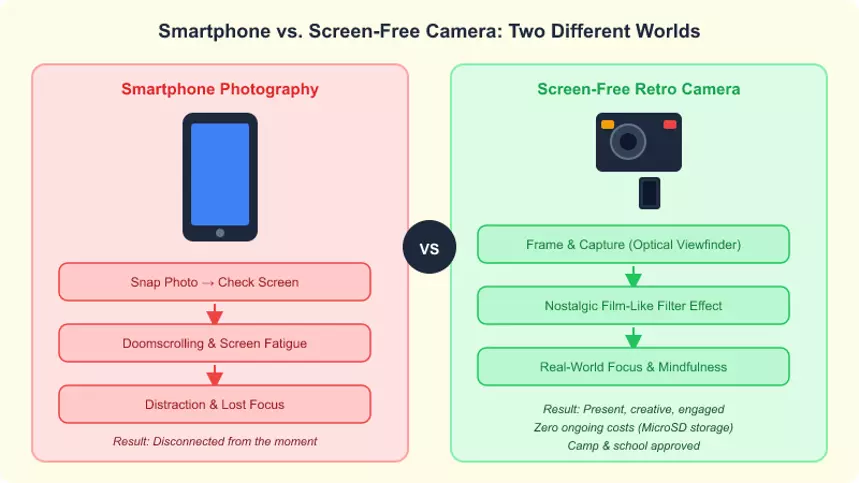
Figure 1: The fundamental difference in experience between smartphone photography and screen-free retro cameras.
Why Parents and Kids Both Love It
Mindful Creation
Without the instant gratification of a rear screen, kids focus entirely on the scene in front of them. They engage with the physical act of framing, composing, and capturing—enjoying the magic of photography without immediately checking for "likes" or editing out imperfections. This intentional approach to image-making fosters creativity and patience, qualities that are increasingly rare in the age of infinite digital scroll.
Parents report that children who use screen-free cameras demonstrate greater observational awareness, taking time to notice lighting, composition, and interesting moments rather than firing off dozens of rapid shots. The constraint becomes a creative catalyst.
Zero Ongoing Costs
Unlike traditional analog film, which requires expensive development and chemical processing at $15-25 per roll, these modern retro cameras save images digitally onto hidden MicroSD cards. Kids get the nostalgic, film-like aesthetic and the satisfying "click" of a mechanical shutter, while parents avoid the continuous cost of film rolls and development fees.
The economics are compelling: a single MicroSD card (typically 16-32GB, costing under $10) can hold thousands of photos. Compare this to traditional film at roughly $1 per 36 exposures plus development, and the value proposition becomes obvious for families.
Summer Camp & School Approved
With an increasing number of schools and summer camps banning devices with screens and internet capabilities, these screen-free digital tools have become the ultimate loophole for youth self-expression. They satisfy a child's desire to document their experiences while complying with institutional technology policies designed to reduce distraction and social pressure.
Camp directors and educators have embraced these cameras as tools that encourage outdoor exploration, peer interaction, and creative storytelling—without the behavioral concerns associated with connected devices. Many programs now include photography as a structured activity, using screen-free cameras as the designated tool.
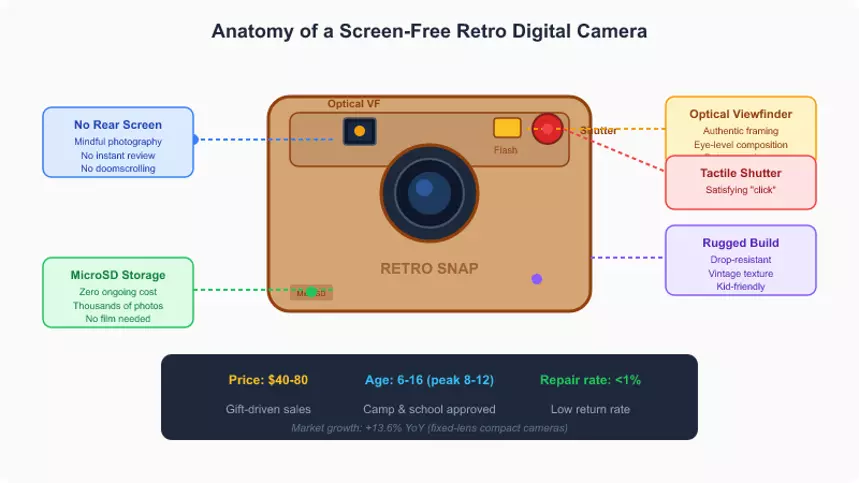
Figure 2: Anatomy of a screen-free retro camera—vintage aesthetics with modern digital convenience.
Market Implications for Retailers
The screen-free camera trend presents a significant opportunity for retailers and distributors. Key market dynamics include:
- Growing demand across age groups 6-16, with peak interest in the 8-12 tween segment
- Gift-driven purchases dominating sales, particularly around holidays, birthdays, and summer camp season
- Premium positioning with acceptable price points of $40-80, significantly higher than traditional toy cameras
- Repeat purchase potential through accessory ecosystems: straps, cases, and decorative skins
- Low return rates due to simple operation and digital reliability (no film to ruin)
Design Elements That Drive Sales
The most successful screen-free cameras in 2026 share several design DNA elements that retailers should look for when selecting products:
- Tactile shutter button with satisfying mechanical "click" feedback
- Optical viewfinder (not digital) for authentic framing experience
- Rugged, drop-resistant construction with rubberized or textured finishes
- Vintage color palettes—mustard yellow, sage green, coral, cream
- Hidden digital interfaces—USB ports and card slots concealed behind panels
- Long battery life using standard AAA or rechargeable lithium batteries
The Grand Vision Approach
At Grand Vision Technology, our children's camera lineup is designed to meet this emerging demand head-on. Our products combine the durable, kid-friendly construction that parents expect with the retro aesthetic and screen-free philosophy that today's youth culture demands. Each model is engineered for real-world durability while maintaining the visual appeal that drives gift purchases and social media buzz.
With our direct-from-factory supply chain and experienced R&D team, we offer retailers competitive pricing on screen-free camera designs that align with 2026 market trends. Our repair rate below 1% ensures customer satisfaction and minimizes after-sales support costs for our distribution partners.
Discover our children's camera collection at www.grandvisionsz.com or contact sales@grandvisionsz.com for wholesale and distribution opportunities.
